Snoring might seem harmless, but for millions of people, it is a sign of sleep apnea. Sleep apnea is a common but often missed condition that causes you to stop and start breathing while you sleep.1
In this article, we will explain the difference between simple snoring and sleep apnea, as well as the key symptoms to watch for and when to talk to a doctor.
Is It Just Snoring or Could It Be Sleep Apnea?
Snoring is typically caused by a narrowing of your upper airway. Tissues in the back of your throat sometimes relax in your sleep and drop down, partially blocking the passageway. Air from your breathing rattles the tissue, creating that distinctive noise as it flows past.2
While sleep apnea is a common condition that occurs when your breathing stops and restarts many times while you sleep. This can prevent your body from getting enough oxygen.3
There are two types of sleep apnea:3
- Obstructive sleep apnea happens when your upper airway becomes blocked many times while you sleep. The blockage can reduce or completely stop airflow. This is the most common type of sleep apnea.
- Central sleep apnea occurs when your brain does not send the signals needed to breathe. Health conditions that affect how your brain controls your airways and chest muscles can cause central sleep apnea.
Signs that snoring might be sleep apnea
You cannot tell by symptoms alone whether you have sleep apnea or how severe the condition might be, but recognizing potential signs of sleep apnea can help you know when to talk to your doctor.
Some of the most common obstructive sleep apnea symptoms happen during sleep. These symptoms include:4
- Snoring
- Pauses in breathing
- Choking or gasping in the air
Other symptoms of obstructive sleep apnea can affect you when you’re awake like:4
- Excessive sleepiness during the day: You may feel very sleepy during times when you expect to feel alert and may even fall asleep while doing activities like reading, driving, or watching television.
- Morning headaches: On most mornings, you may wake up with a squeezing headache. The pain is usually felt on both sides of the front of your head and may last for several hours.
- Poor concentration: You may struggle with attention or focus on work or school or when doing other daily tasks if obstructive sleep apnea is reducing the quality of your sleep.
- High blood pressure: Many people with obstructive sleep apnea have elevated blood pressure. While high blood pressure can be caused by other conditions, it may be a sign of obstructive sleep apnea if it occurs alongside other symptoms.
Causes of sleep apnea
- Obesity
- Having a large neck
- Getting older – although children and young adults can also get it
- Having other family members with sleep apnea
- Smoking
- Having large tonsils or adenoids
- Sleeping on your back
- Chronic obstructive pulmonary disease (COPD)
When to Talk to a Doctor?
Talk with your doctor if you experience any of the following potential warning signs of sleep apnea:
- Snoring on a regular basis
- Breathing difficulties when you sleep
- Waking up unrefreshed even after sleeping at least seven hours
- Needing nine or more hours of sleep to feel rested
- Regular morning headaches
- Obesity or rapid weight gain
- Problems with concentration or memory
- Uncontrolled medical conditions, such as high blood pressure, diabetes, heart problems, or neurological conditions
- Difficulty staying awake at work or school or during other times during the day
How Do You Know if You Have Sleep Apnea?
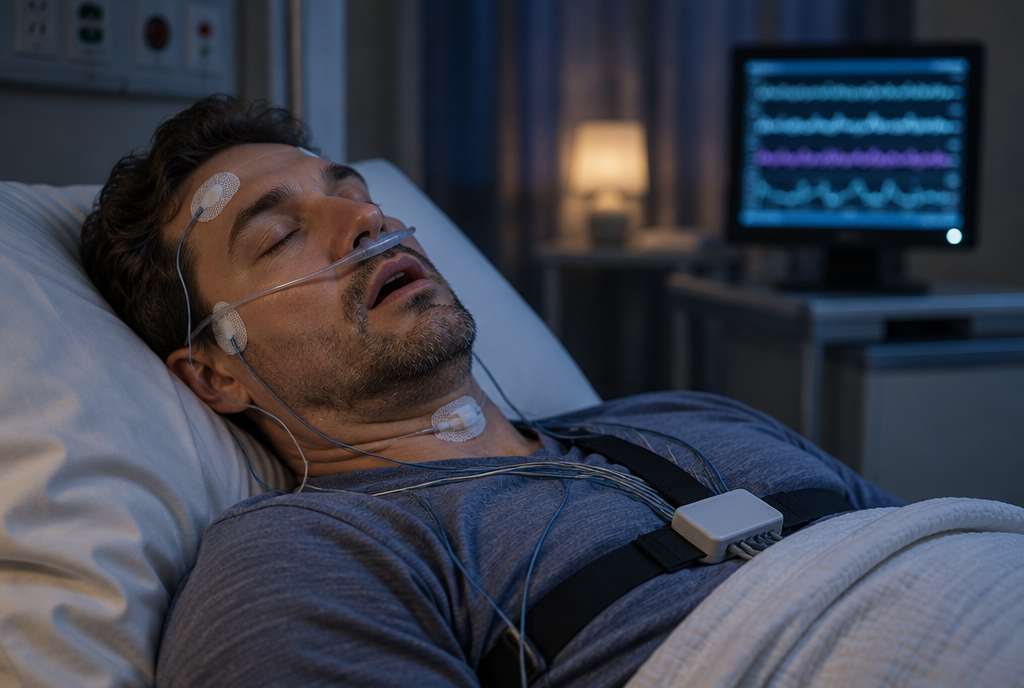
The only definite way to tell the difference between snoring and snoring caused by sleep apnea is to have diagnostic testing. This can involve going to a clinic for sleep study or, in some cases, taking a home sleep apnea test.
During a sleep study and a home sleep apnea test, devices monitor your breathing patterns, oxygen levels, heart rhythms, and other bodily systems while you sleep. This data can be used to determine whether you have sleep apnea.
If your doctor thinks testing is necessary, they can recommend the best type of testing for you.
Things you can do to help with sleep apnea
If you have been diagnosed with sleep apnea, there are some things you can do to help.
- Try to lose weight if you are overweight
- Exercise regularly being active can improve your symptoms and help you keep to a healthy weight
- Have good sleep habits like making sure your bedroom is dark and quiet, and going to bed and waking up at the same time each day
- Sleep on your side
Finally,
If you are snoring a lot, feeling tired during the day, or notice pauses in your breathing at night, talk to your doctor. Sleep apnea is common and very treatable. The sooner you get help, the sooner you can sleep better and feel better.1
Frequently Asked Questions
Can you have sleep apnea without snoring?
Yes, it is possible to have sleep apnea without snoring. While many people with obstructive sleep apnea do snore, some may experience symptoms like pauses in breathing, gasping during sleep, or daytime fatigue without noticeable snoring.
Is obstructive sleep apnea the same as snoring?
No, obstructive sleep apnea isn’t the same as snoring. Snoring is the sound of airflow vibrating through relaxed tissues, while obstructive sleep apnea is a sleep disorder that involves repeated pauses in breathing during sleep. Snoring can be a symptom of obstructive sleep apnea, but not everyone who snores has sleep apnea.
References
- Tufts Medicine (n.d.) It’s just snoring: How to spot sleep apnea symptoms. Available at: https://www.tuftsmedicine.org/about-us/news/it-just-snoring-how-spot-sleep-apnea-symptoms (Accessed: 29 September 2026).
- Harvard Health Publishing (n.d.) Is snoring always a sign of sleep apnea? Available at: https://www.health.harvard.edu/diseases-and-conditions/is-snoring-always-a-sign-of-sleep-apnea (Accessed: 29 September 2026).
- National Heart, Lung, and Blood Institute (n.d.) Sleep apnea. Available at: https://www.nhlbi.nih.gov/health/sleep-apnea (Accessed: 29 September 2026).
- American Sleep Apnea Association (n.d.) Is it snoring or sleep apnea? Available at: https://www.sleepapnea.org/snoring/is-it-snoring-or-sleep-apnea/ (Accessed: 29 September 2026).
- NHS (n.d.) Sleep apnoea. Available at: https://www.nhs.uk/conditions/sleep-apnoea/ (Accessed: 29 September 2026).